Greek Used Cars Market Analysis

Dataset
Objective
Test a hypothesis: do used car prices in Greece rise in winter and fall in summer? Also a project to sharpen Python skills across web scraping, data cleaning, and end-to-end analysis using real market data.
Approach
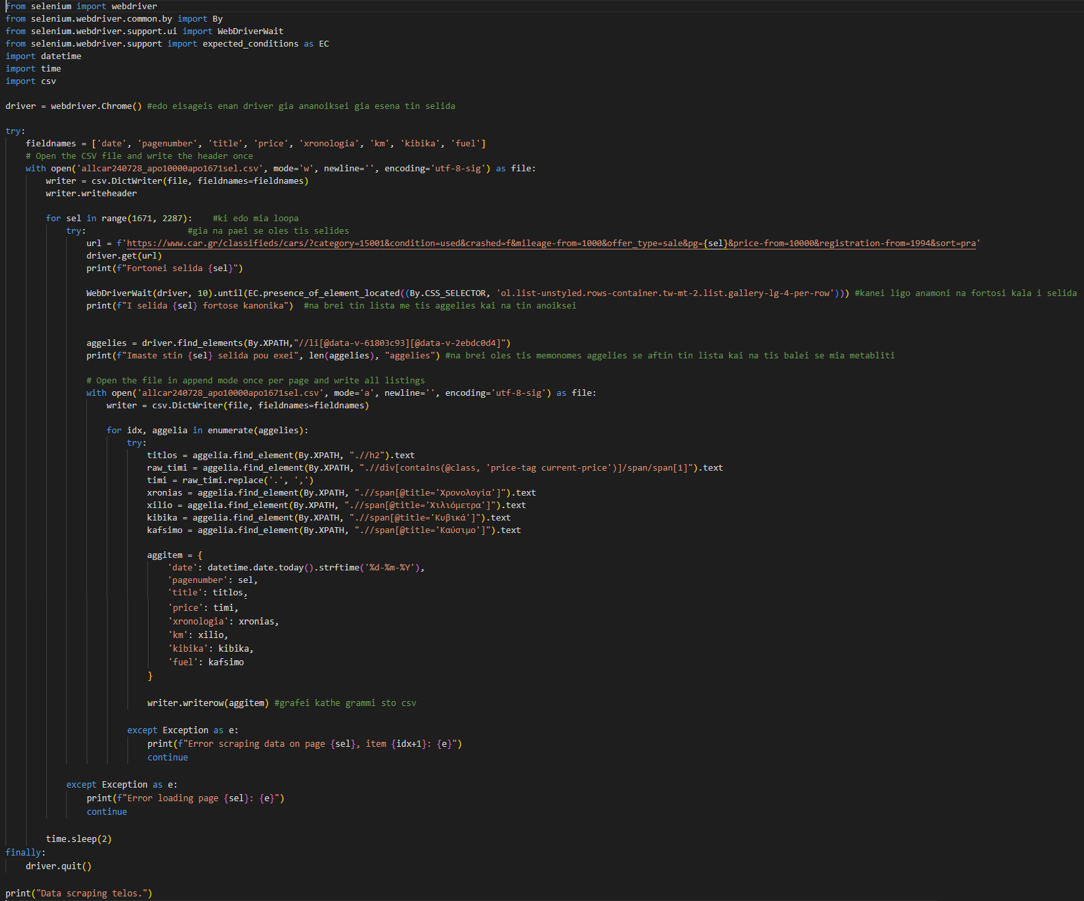
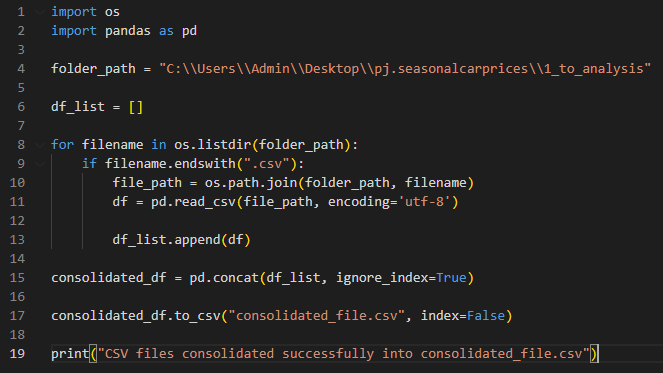
Scraped Greece's largest used car marketplace three times at three-month intervals using Python and Selenium, capturing seasonal price variation across a full market cycle. Selenium handled dynamic page content that standard requests couldn't reach.
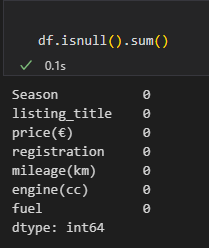
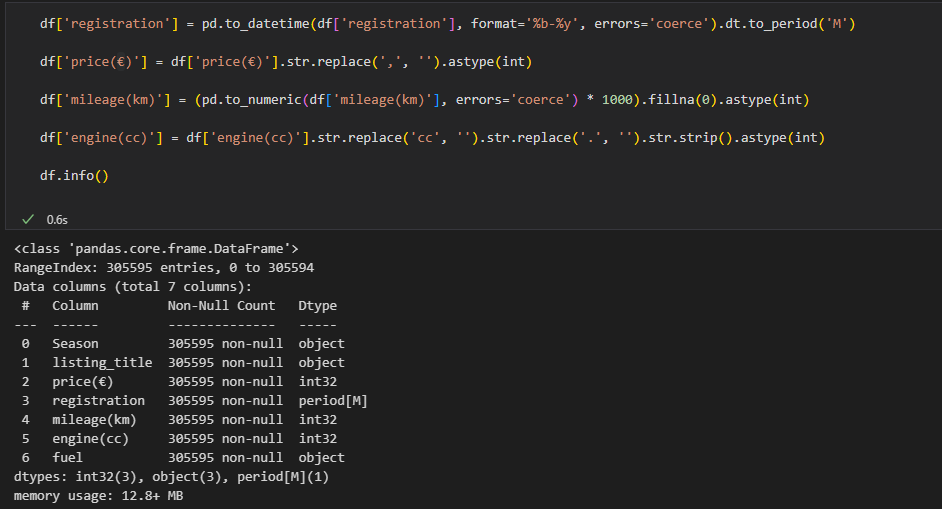
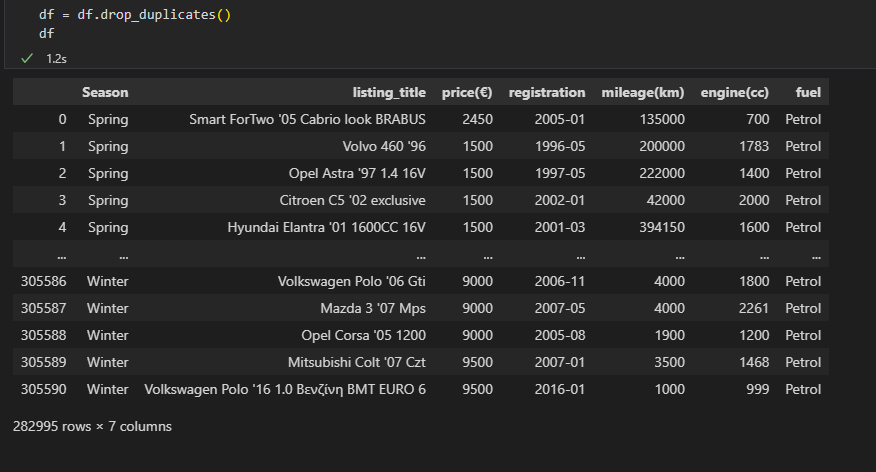
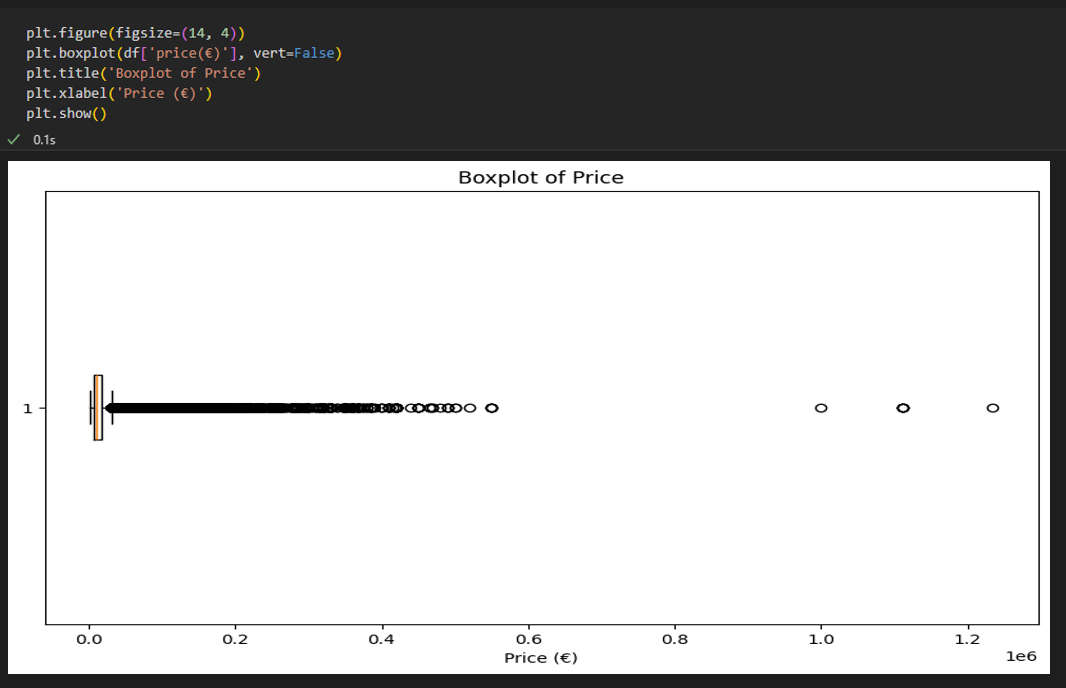
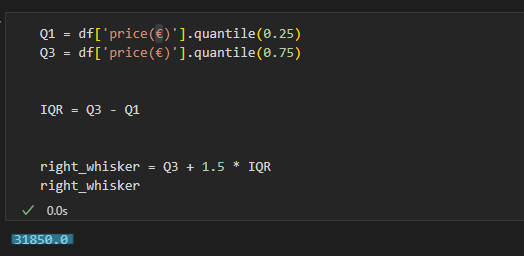
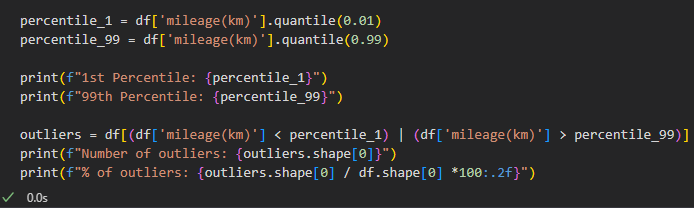
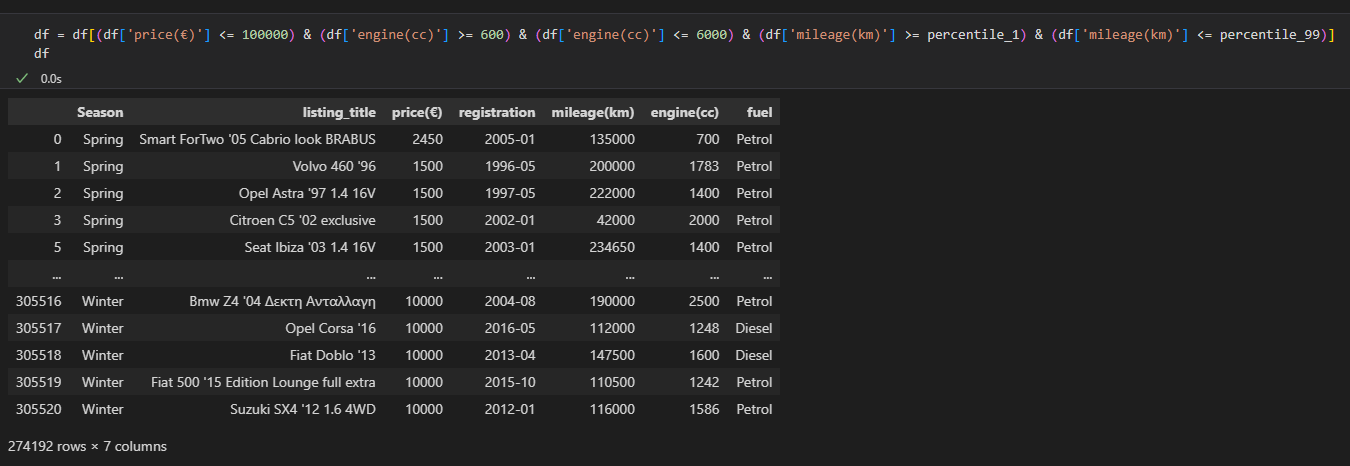
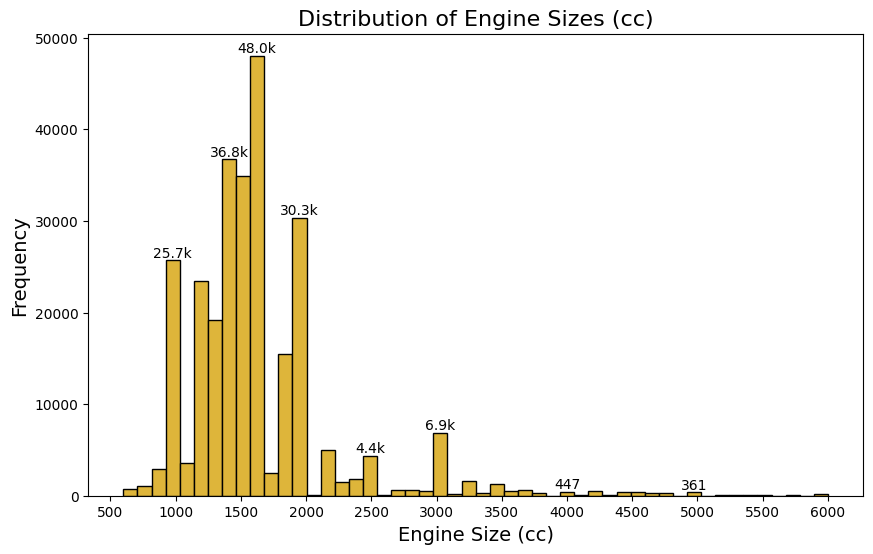
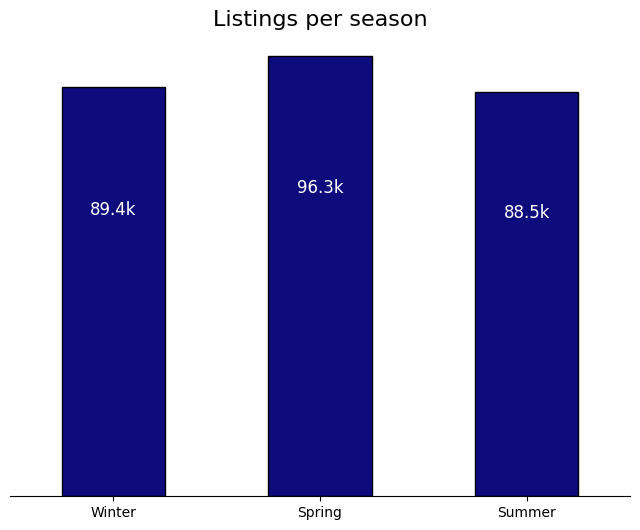
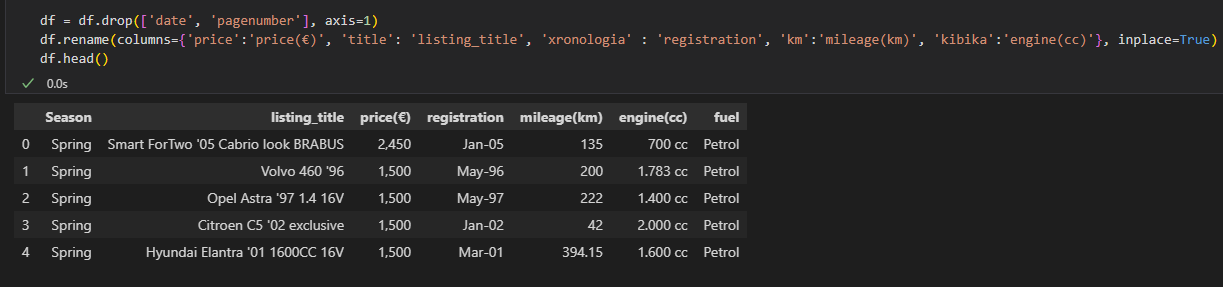
Raw dataset of 305,595 listings was cleaned in stages: duplicate records removed (22,600 removed, ~7.4%), outliers filtered on price (listings above €100k), mileage (1st and 99th percentile), and engine size (bottom 0.4% and top 0.1%). Final clean dataset: 274,192 listings.
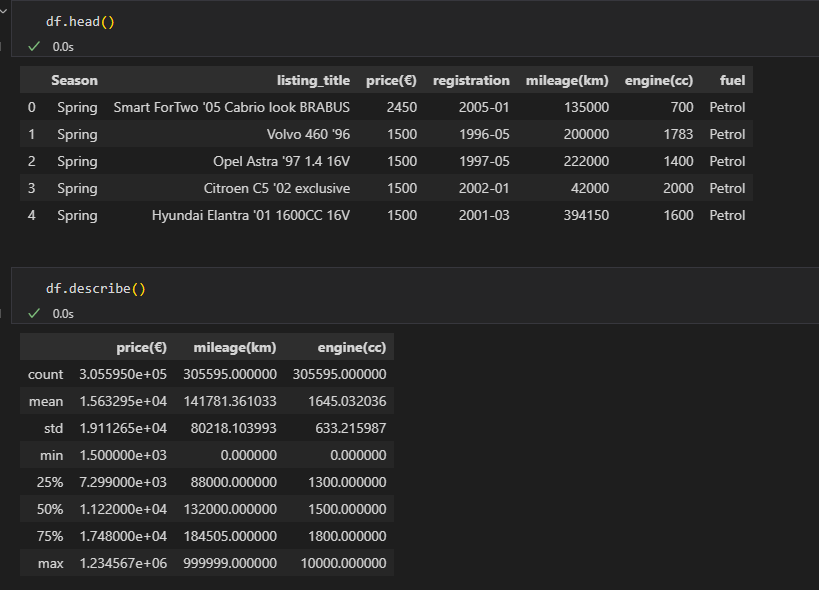
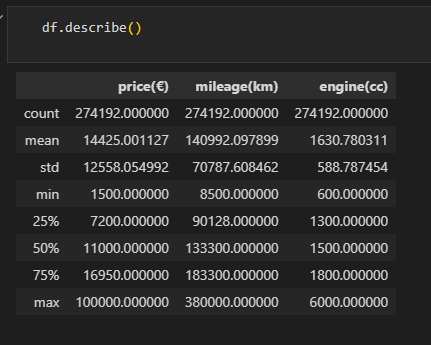
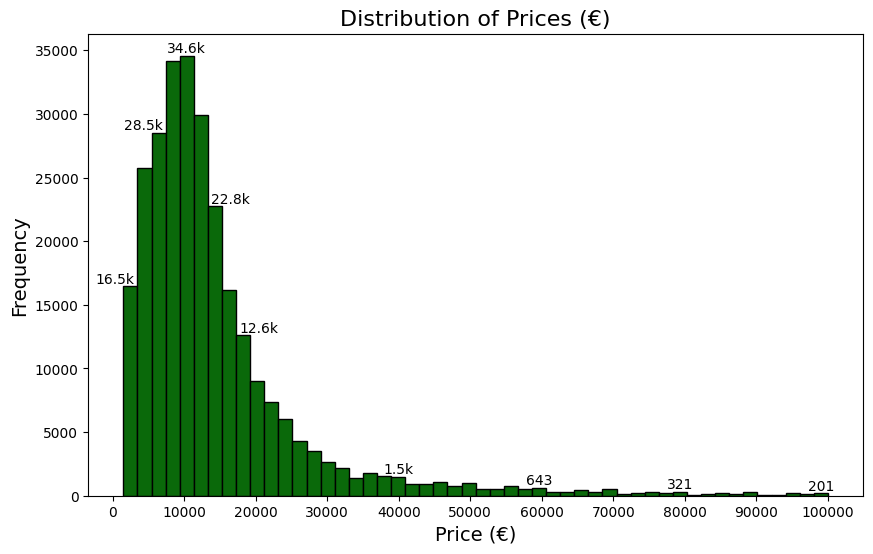
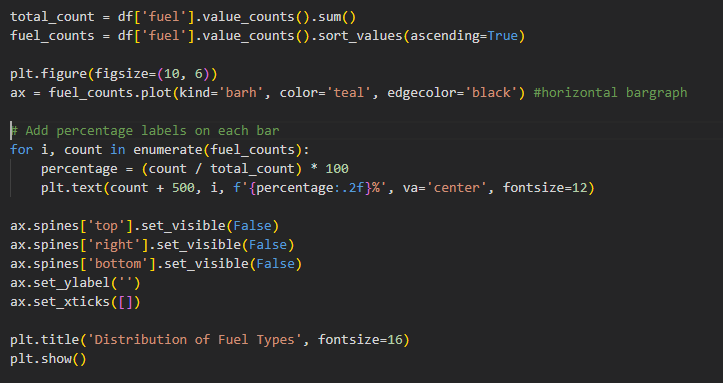
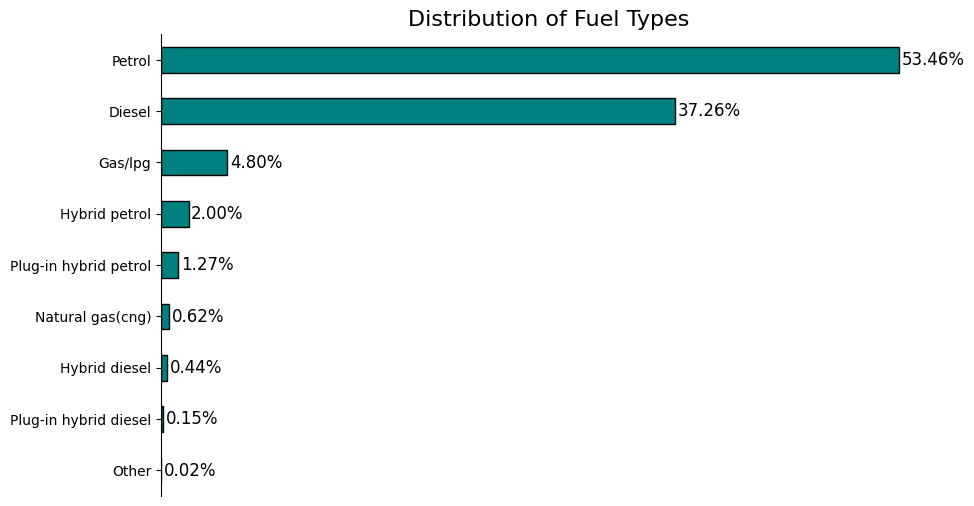
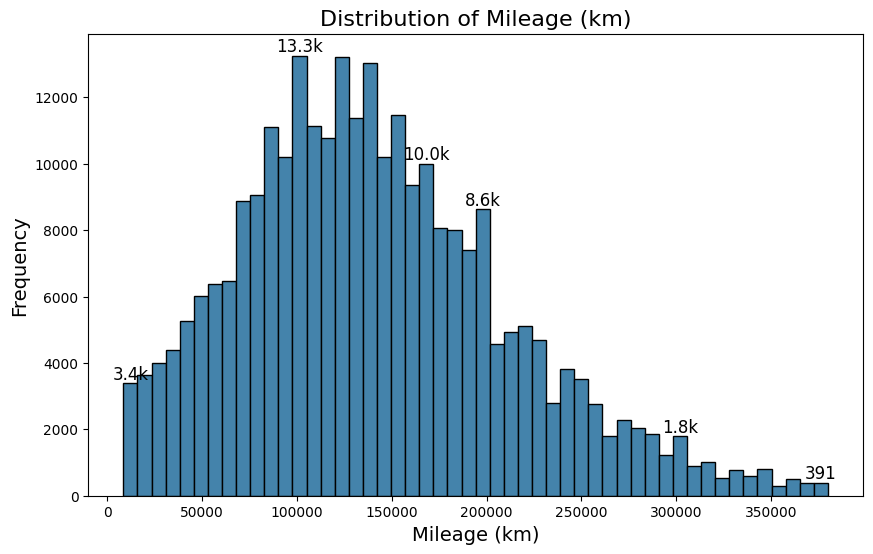
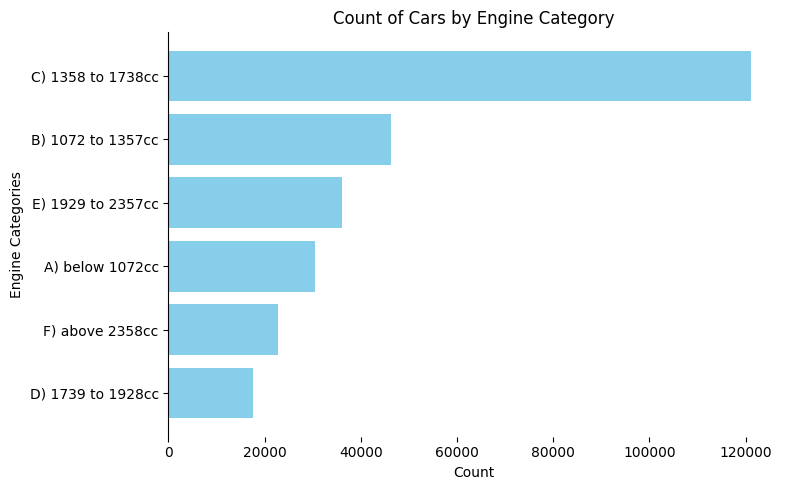
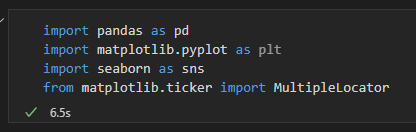
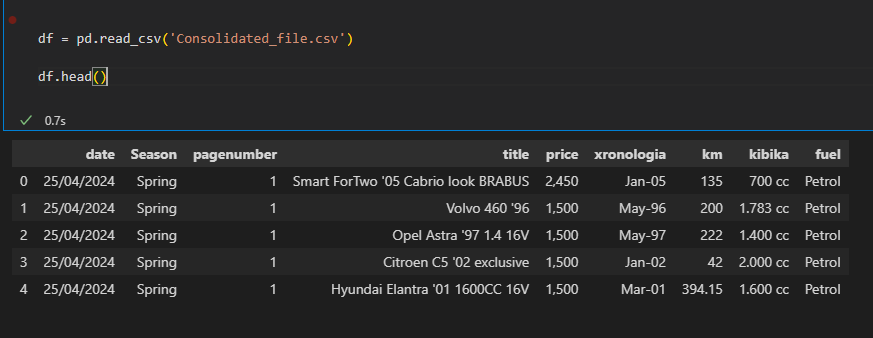
Full exploratory data analysis was run in Jupyter using Pandas, Matplotlib, and Seaborn before moving to hypothesis testing. Key market profile: median price €11,000, mean €14,425 (right-skewed), median mileage 133,300 km, petrol and diesel accounting for ~91% of listings.
Key findings
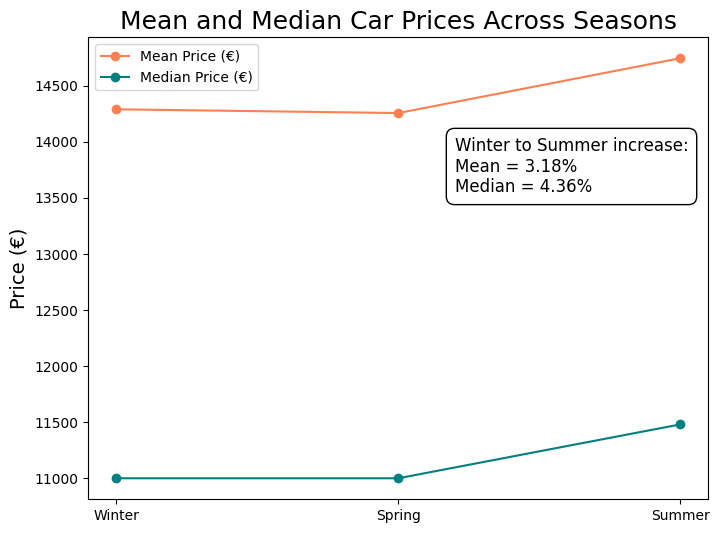
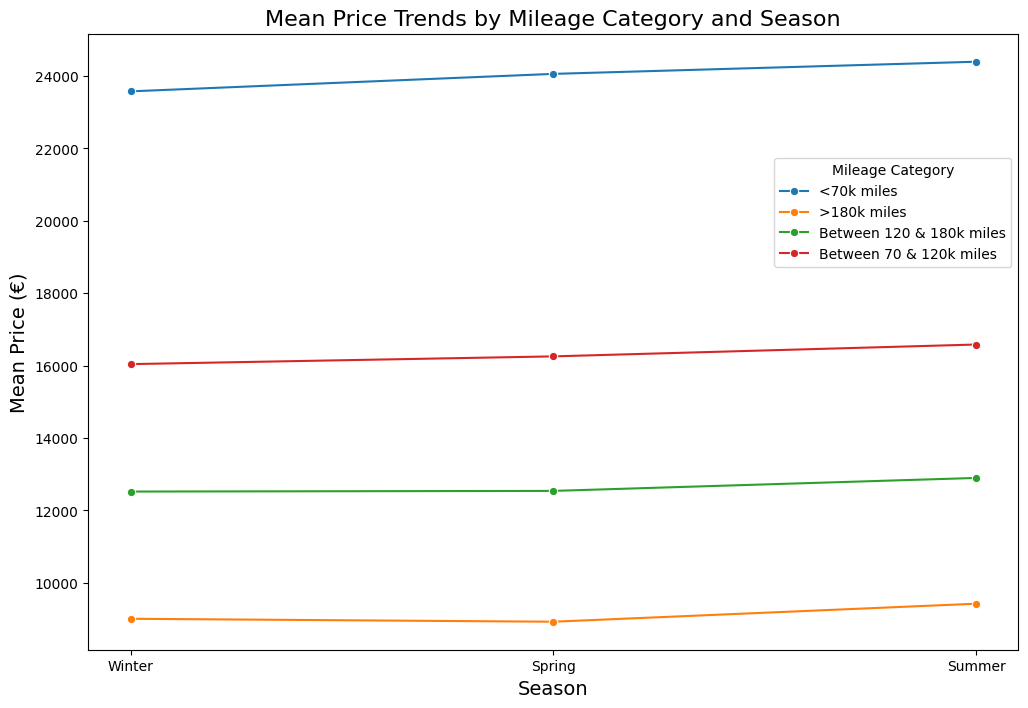
The hypothesis was not supported. Prices actually increase in summer, not winter.
- Summer mean price (€14,745) was higher than winter (€14,290) and spring (€14,256)
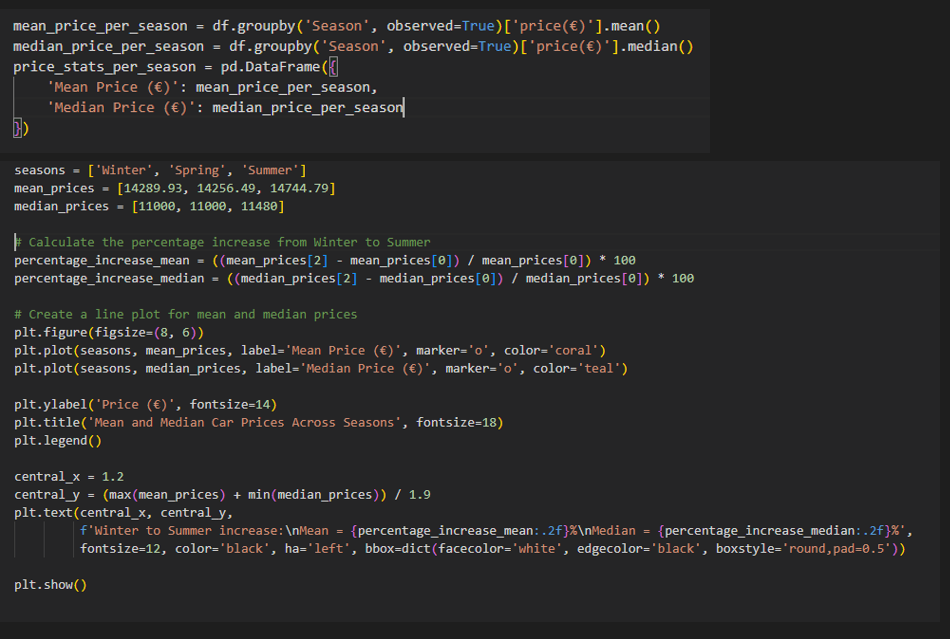
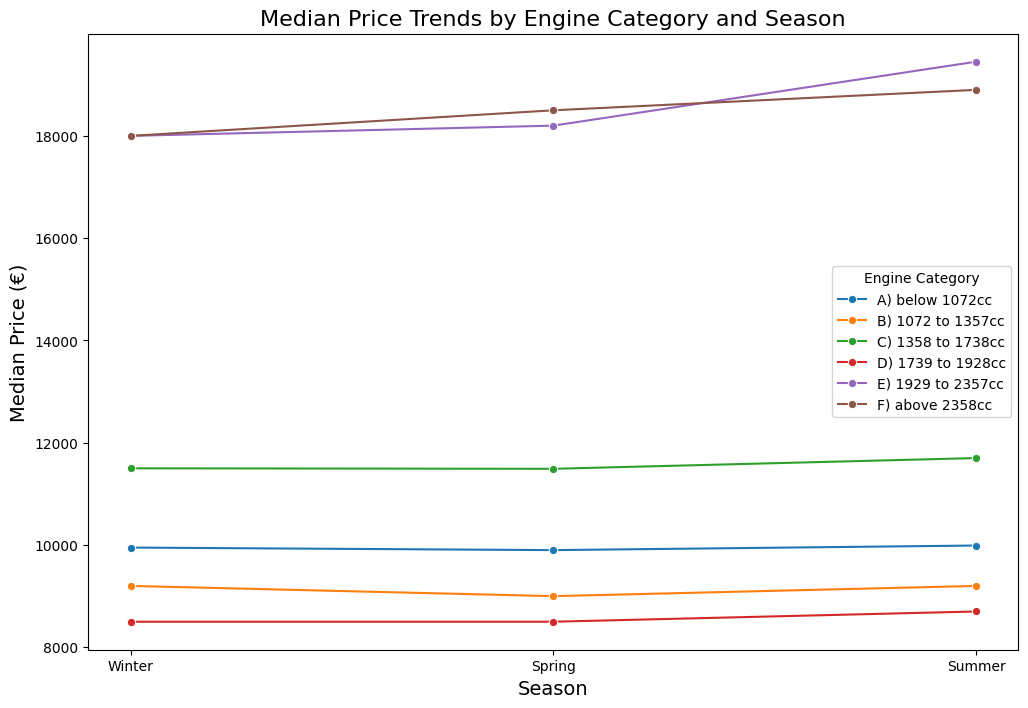
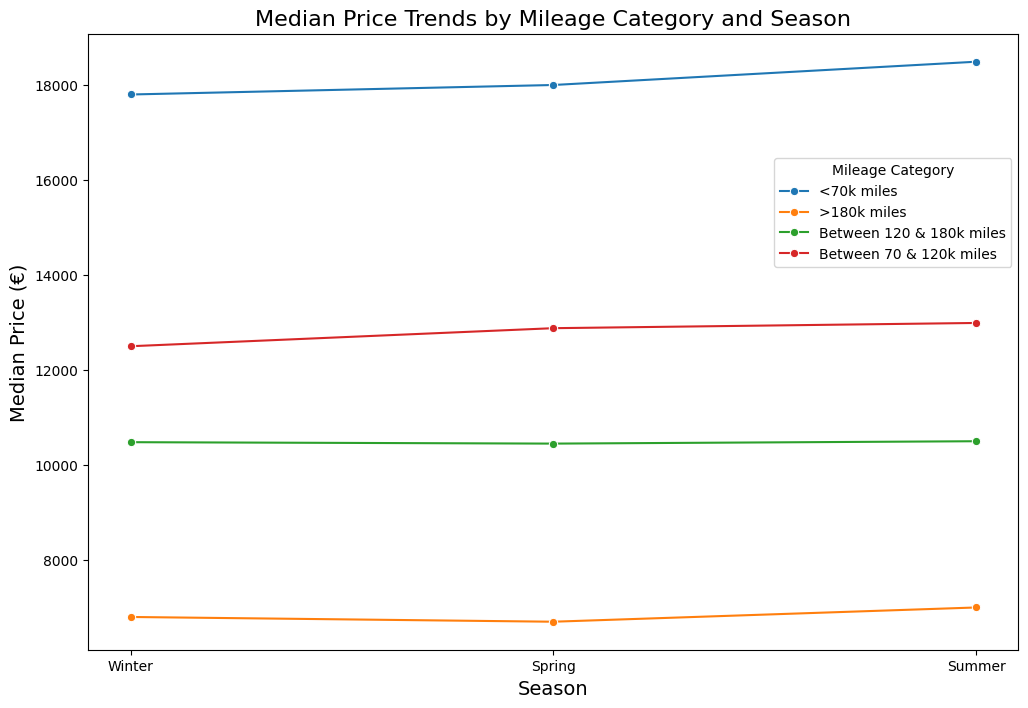
- Mean price increased 3.18% from winter to summer; median increased 4.36%
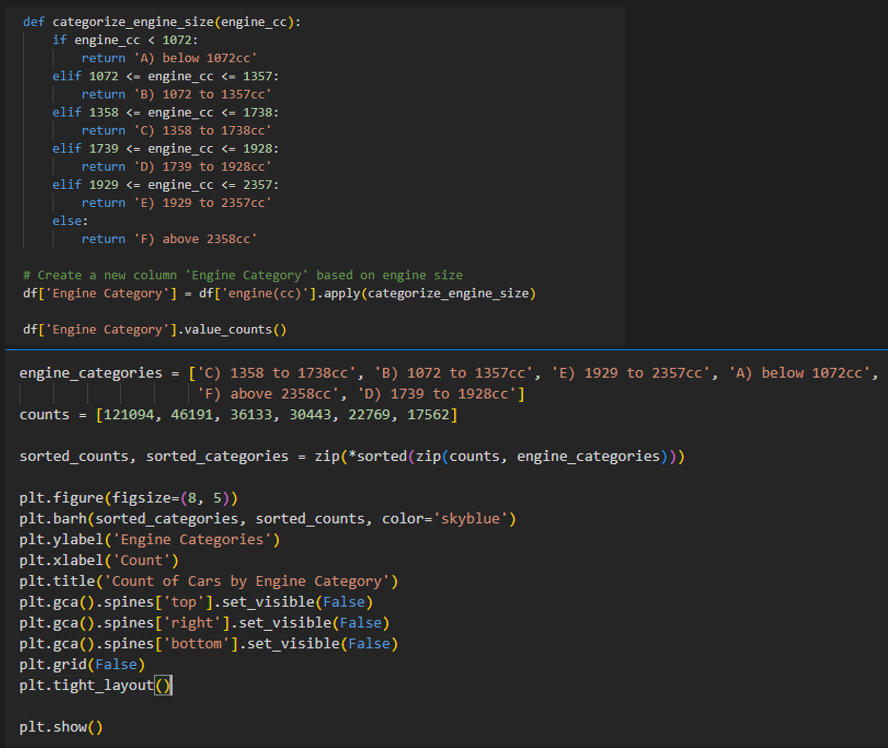
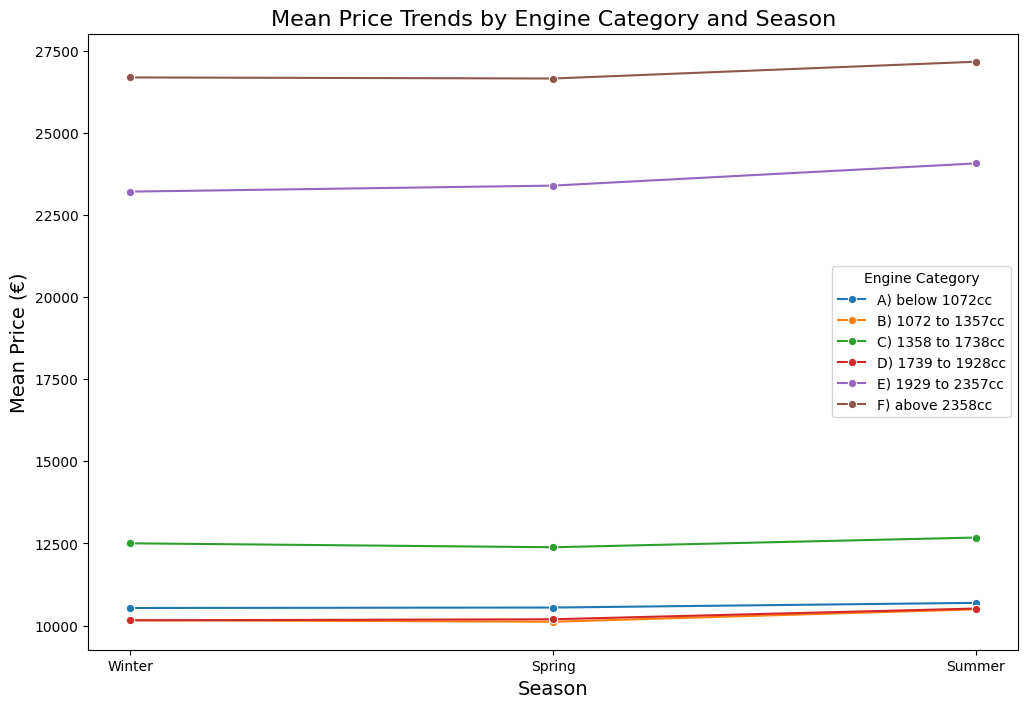
- Larger engine sizes drove most of the mean price movement
- Mean increased more sharply than median, indicating the influence of high-value outliers
- Smaller engine categories (A, B) showed flatter seasonal trends, contributing less to the overall effect
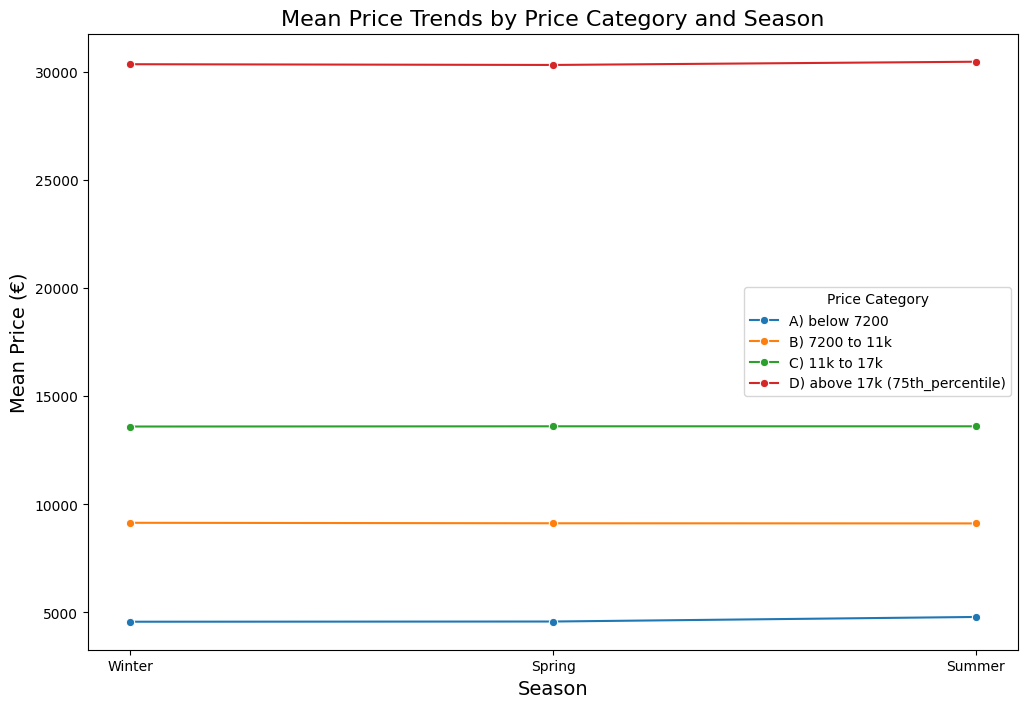
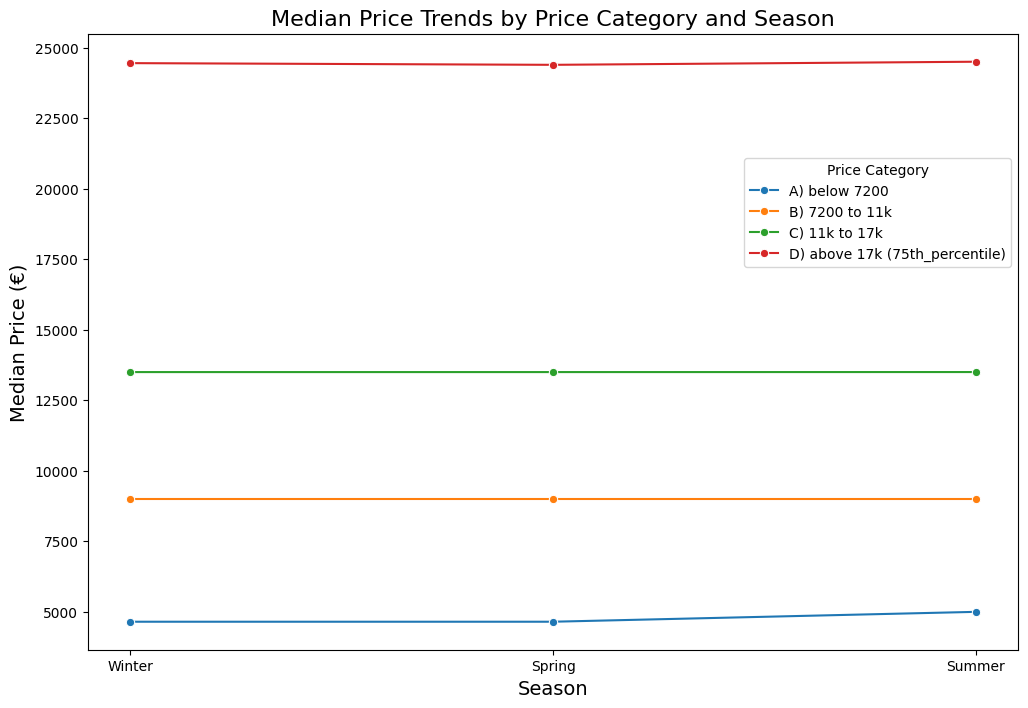
- Segmentation analysis by engine size, mileage category, and price category all consistently confirmed summer price increases

.PNG)